I have stacks of books creeping higher and higher next to my bed, and in piles around my office. You will notice many of them have bookmarks somewhere in the first third. I’m a chronic starter of books.
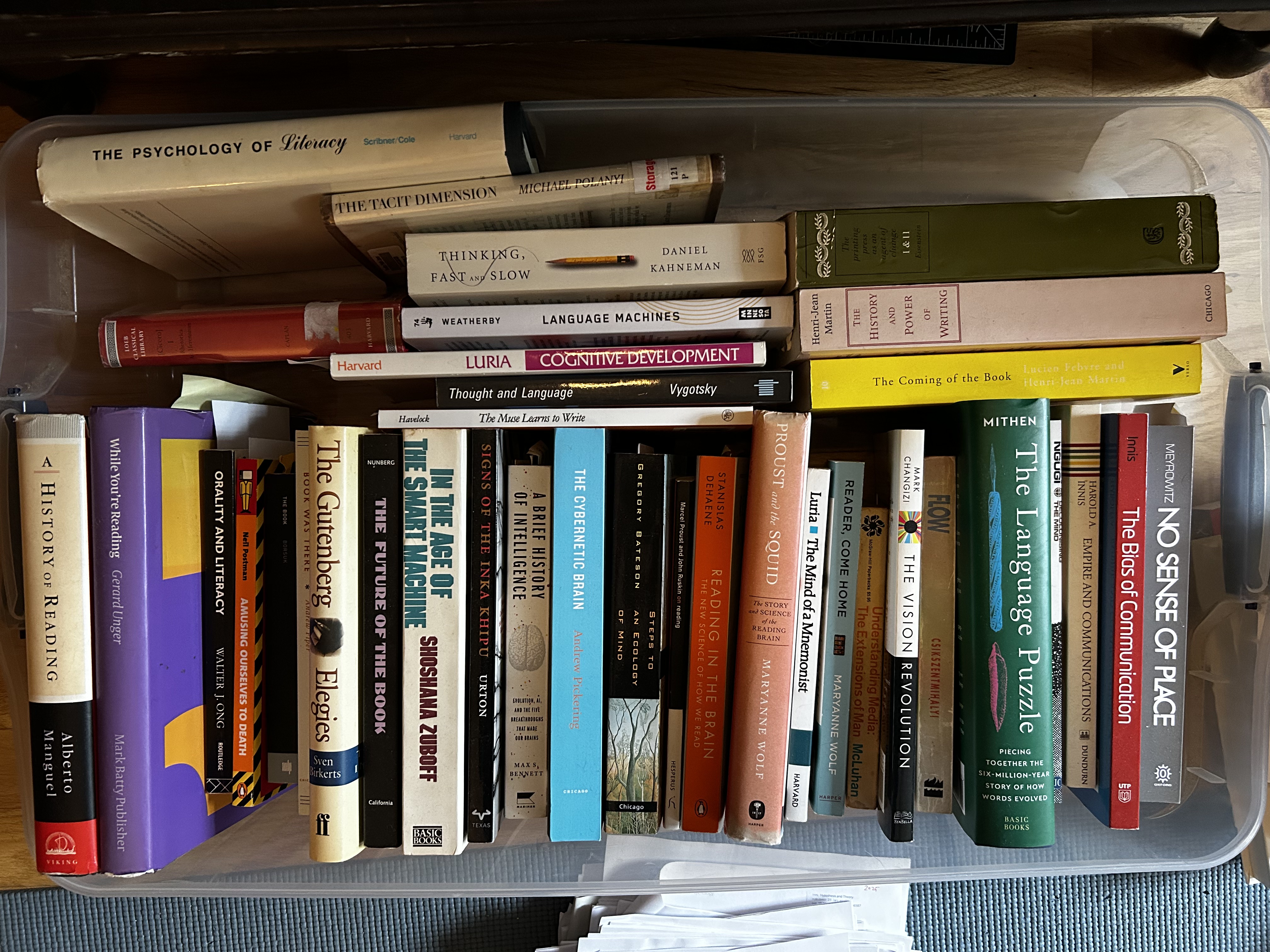
The friction of reading books is real. I struggle with it, and I know I am not alone. Can we just blame the Internet? Were we routinely reading and finishing books before 1995? Maybe. The interactivity of the Web, epitomized by Clay Shirky’s story about a four-year-old girl going behind the TV to look for the mouse, really did something to our ability to remain in the flow state of reading a book. Distraction is the friction. When our brains realized there’s always something more interesting to be found on the Internet, making it possible to look at it on the toilet was all but inevitable. That reminds me, I need to finish reading Flow by Mihaly Csikszentmihalyi.
Ever since I started working on this book, I’ve found that I haven’t completely lost the ability to “lock in” as this current generation is so fond of saying. “Locking in” is what you have to do to combat the collective war on our attention spans. Locking in is about intentionality, having a specific goal when reading. You have to make sure that what you’re getting from the book is more interesting and important than the messages piling up in your Inbox, the new tweets or notifications, because maybe there’s a new YouTube video in your feed, or maybe somebody has replied to your comment. Locking in is ignoring that noise by any means necessary, getting rid of it by turning things off, putting them out of reach, installing some blinders to keep you from yourself. I realized that I had so much ambient (distracting) information coming in from so many parts of my multi-monitor setup that I installed a “noise-cancelling app for MacOS” called Monocle which blurs out everything but the current selected window. The bookmarks are creeping further along. Words are being written.
Finishing books is overrated. I give myself permission to not feel guilt when I haven’t finished a book — even one whose premise I find compelling — all the way to the very last page. Don’t get me wrong, it feels great to get to that last page when it happens, but I can still feel a sense of accomplishment if I extract anything worthwhile from a reading session, no matter how short. That should be the goal of reading, not how many pages you can get through. I’ve always felt it’s the job of the writer to pull you through to the end, to make you want to read further. And I’m made more acutely aware of this now that I’m on the other side, trying to be the one doing the pulling. This is the terror of writing, the fear that nobody will want to come with you on the journey.
The wonderful thing about books (the physical objects) is that you can always come back to them, that is, if they’ve survived all the moves, the boxing and culling, by sparking some potential joy. I’ve bought books that I have barely cracked open, and they sat for years on my shelf, gathering dust. And then, twenty years later, I find myself looking for a particular book and, surprise! I already have it! It is then that I actually read it with a renewed, intentional sense of purpose. That’s why I can’t feel guilty about buying books on impulse. I’m buying it as a gift for my future self. I trust that the purpose will become clear later, when the time is right, and I will actually read it.